


Please select your store


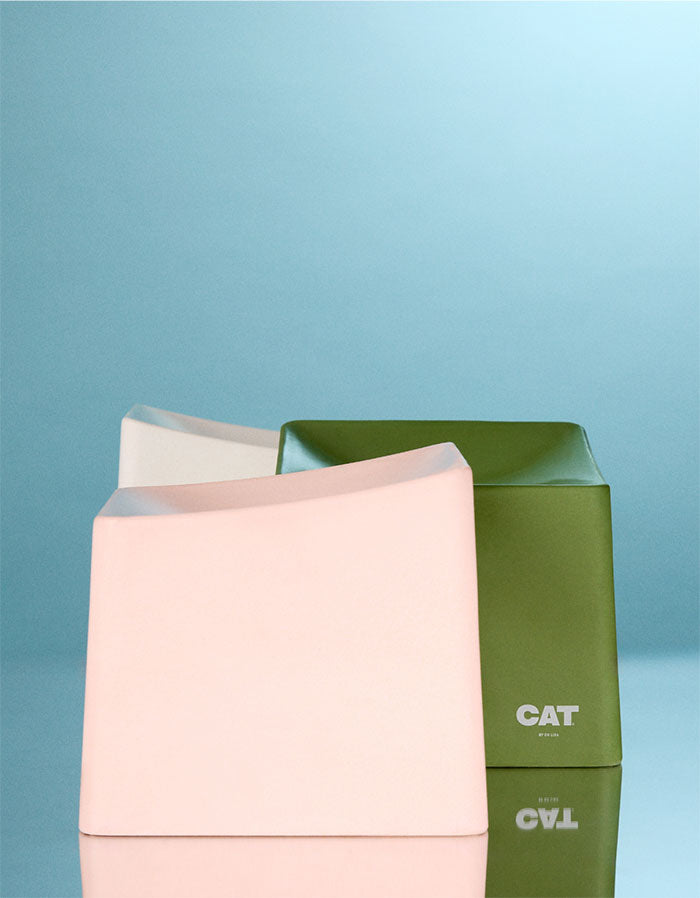
We know what you’re thinking, bowls are meant to be round. But what if they weren’t? What if they were *gasp* square? Designed to fit snuggly into the corner of a room, where they can’t get knocked over or stepped on? And what if they were raised, extra wide and shallow, so your cat can be more comfortable when drinking or eating? All while being 100% compostable. That’d be nuts, right?
Slight irregularities in shape, texture and glaze may be present due to the hand-crafted nature of these bowls.
Put water in deeper bowl for your cat to drink. Ensure your cat has clean water available at all times. Add food to shallow bowl - this shape will allow your cat to consume food more comfortably. Place bowls on non-slip silicone mats in corner of room. Let your cat eat and drink when it suits them (you know they’re the ones who make the rules). Wash and rinse well after use.
 100% money back guarantee

Cats don’t just “eat.” They assess. They hesitate. They decide whether the setup feels right.
That’s why cat bowls should work with your cat’s anatomy and instincts, not fight them. A basic cat bowl on the floor can create unnecessary friction—awkward posture, bowl sliding, and constant whisker contact that turns meals into a low-grade stress event.
The CAT by Dr Lisa Corner Bowls are designed with feline comfort in mind: a supportive angle, raised height, and a shape that makes mealtimes feel calmer and easier. These 100% compostable bamboo cat feeding bowls are about reducing small stressors that add up—especially for picky cats, fast eaters, and seniors.
Read More
The way a cat holds their head and neck while eating matters more than most people realize.
Elevated cat bowls support a more natural feeding position, which can reduce strain through the neck and shoulders and make swallowing feel smoother. A well-designed raised cat bowl can be especially helpful for cats who are stiff, older, or prone to post-meal regurgitation.
This is one reason elevated cat bowls USA searches keep trending upward—more pet parents want simple, functional changes that improve daily life without complicated routines.
Whiskers are sensitive sensory tools. They’re not decoration.
When whiskers repeatedly press into narrow bowl edges, some cats become overstimulated and uncomfortable —you may notice them walking away mid-meal, pawing food out onto the floor, or refusing certain dishes altogether.
A wide, shallow cat food bowl helps reduce constant whisker contact and makes eating more comfortable. Combined with an elevated design, cat bowls like this can help meals become more consistent and less fussy.
A good set of cat bowls can help almost any cat, but they’re especially useful for:
If you’re searching for a cat food bowl that supports everyday comfort, raised cat food bowls are a smart choice. A well-shaped, elevated bowl is a simple upgrade that can remove a surprisingly common barrier to comfortable eating.
Feeding doesn't exist in isolation from the rest of your cat's daily life. It's part of a bigger, interconnected care picture.
Choosing supportive, ergonomic cat bowls complements other daily essentials, from grooming routines to hygiene management and environmental enrichment. Many cat parents pair improved feeding setups with thoughtful cat care products, gentle cat skin care routines, and practical items like cat wipes to support cleanliness around feeding areas where food debris and water splashes accumulate.
Accidents happen too, especially with kittens, senior cats, or those with digestive or behavioral issues. Having a reliable pet urine cleaner nearby helps keep feeding zones fresh and stress-free rather than developing unpleasant associations.
Even the highest-quality, most expensive food can fall short if the actual eating experience causes physical discomfort or stress.
Many cats benefit from pairing ergonomic cat feeding bowls with palatable nutrition options. When feeding posture, physical comfort, and taste all align properly, cats are measurably more likely to eat consistently, calmly, and without digestive upset.
Dr Lisa's clinical approach always centres on reducing friction and stress in everyday routines. Feeding should feel easy and natural — for you and for your cat.
These cat bowls are made to be used every day: breakfast, lunch, dinner, and the inevitable overnight “I’m starving” requests.
The goal isn’t to reinvent how cats eat. It’s to support how they already eat—comfortably, confidently, and with fewer triggers that create avoidance or mess.
As Dr Lisa often reinforces in clinical practice: physical comfort isn't a luxury for animals. It's a baseline welfare requirement that we owe them.
They can be. Elevated cat bowls support a more natural head-and-neck position, which may reduce strain and help some cats swallow more comfortably—especially cats prone to regurgitation or discomfort eating from floor-level dishes.
Yes. Raised cat food bowls that are wide and shallow can reduce whisker contact with bowl edges, which may help sensitive cats eat more calmly and consistently.
They can be, as long as the height is appropriate. Cat bowls elevated should be easy to access without stretching or climbing. If a kitten struggles, lower placement may be better until they grow.
Most cats do best with at least two separate cat feeding bowls—one for food and one for water. In multi-cat homes, separate bowls can reduce competition and stress. Extra water bowls should always be available in multiple locations throughout your home.
Read Less


